
The New Generation of Wearable Brain Imaging
Modular Design. Superior Signal Quality. High-Density Neuroimaging. Built for Modern Neuroscience.
Research Applications
Built Around a New Sensor Generation
HiveOne is the world’s first wearable fNIRS system to integrate high-sensitivity Silicon Photomultiplier (SiPM) sensors, developed in collaboration with ETH Zurich. Triple-wavelength acquisition at 735 nm, 810 nm, and 850 nm enables simultaneous measurement of oxygenated and deoxygenated hemoglobin with exceptional spectral precision.
Sampling rates of up to 200 Hz ensure temporal resolution suitable for cognitive neuroscience, BCI applications, and real-time neurofeedback research.
- World-first SiPM sensor integration in wearable fNIRS for superior signal-to-noise ratio
- Triple wavelengths at 735 nm, 810 nm, and 850 nm for precise hemodynamic separation
- Sampling rates up to 200 Hz for high-temporal-resolution neuroimaging
- Robust performance against motion artifacts in mobile and pediatric paradigms
Next-Gen Optodes
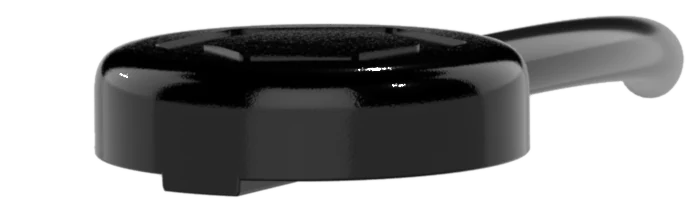
Proprietary Double-Tip optode design integrates a long-channel measurement (30 mm) between optodes, a dedicated short channel (8 mm), and an onboard IMU – all in one compact wearable module.
Full Cortical Coverage
Large-scale cortical imaging with exceptional spatial resolution, covering frontal, parietal, temporal, and occipital regions simultaneously in a single wearable session.
Wearable Form Factor
Despite the high channel count, HiveOne maintains a lightweight wearable design fully suited for mobile, longitudinal, pediatric, and hyperscanning research paradigms.

Dedicated Short Channels, Built Into Every Optode
Every HiveOne optode incorporates a multi-distance measurement architecture with a short-separation channel at 8 mm and a long-separation channel at 30 mm. The short channel captures superficial physiological activity, enabling its use as a local reference signal for noise correction at every measurement point.
This per-optode approach provides high-quality reference data simultaneously across the full montage – delivering more consistent results across adult and pediatric subjects alike.
Improved physiological noise correction
Local 8 mm reference at each optode enables cleaner hemodynamic separation at the cortical level.
Enhanced signal fidelity
Stronger cortical signal separation from systemic interference at 30 mm depth.
Higher reproducibility
More consistent results across adult and pediatric subjects, sessions, and experimental conditions.
More reliable longitudinal measurements
Improved baseline correction supports repeated-measures and long-term research designs.
How HiveOne measures brain activity
Motion-Aware Neuroimaging
Each HiveOne Double-Tip optode includes an integrated inertial measurement unit (IMU) for continuous 6-axis motion sensing at the individual sensor level. IMU data is recorded simultaneously with fNIRS signals, enabling motion-aware data processing, artifact detection, and robust neuroimaging in real-world and pediatric environments.
This is particularly critical for hyperscanning studies, neuroergonomics experiments, clinical monitoring with children, and any research paradigm involving naturalistic participant movement.
Designed for Fast and Scalable Workflows
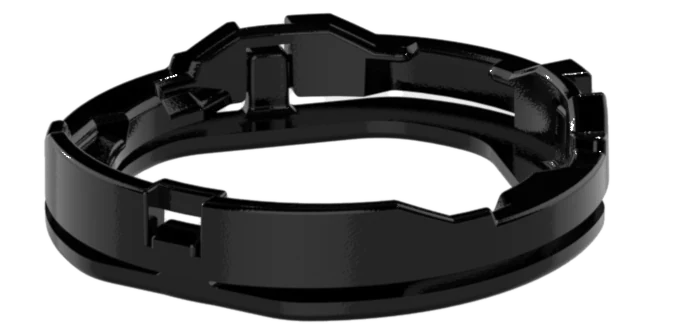
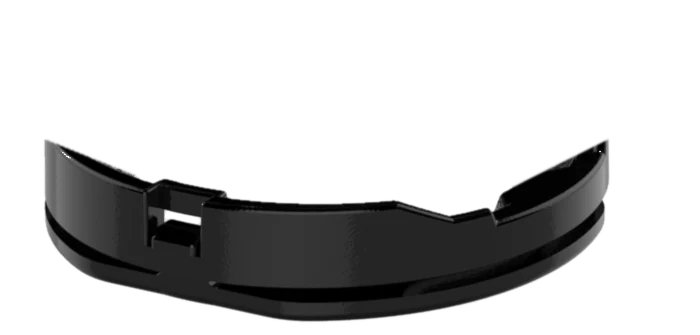
The proprietary HiveOne magnetic holder system makes high-density fNIRS setups practical for everyday research workflows, including studies with children. Reduced setup complexity translates directly into more productive research time and a better participant experience.
- Rapid montage - significantly reduced setup time vs. traditional fNIRS systems
- Simplified handling - intuitive magnetic attachment reduces operator training requirements
- Reproducible placement - consistent optode positioning across sessions and subjects
- Participant comfort - lightweight, low-pressure design suitable for adults and children
- Scalable configurations - supports 8 to 64 optodes without added workflow complexity



Scale the System to Your Research
HiveOne is available in four modular configurations. Start with the setup that fits your current research and scale as your needs evolve.
Compact entry configuration for focused experiments, pilot studies, and targeted cortical region analysis.
Flexible setup for standard neuroscience experiments, mobile applications, and smaller-scale cortical mapping.
High-density configuration optimized for advanced cortical imaging, cognitive neuroscience, and hyperscanning studies.
Full-scale research platform with maximum cortical coverage. Ideal for large cohort studies, translational neuroscience, and precision brain monitoring.
HiveOne combines fast and simple installation with a modular architecture, high-density measurements, and best-in-class signal quality.
Every specification in HiveOne reflects a deliberate engineering decision. From sensor physics to system architecture, the platform was designed to set a new benchmark for wearable neuroimaging.
Multimodal Neuroimaging Ready
HiveOne is engineered for seamless integration with EEG, transcranial electrical stimulation (tES), and eye tracking systems, supporting simultaneous multimodal research workflows without the hardware complexity typically associated with combined neuroimaging setups.
Integrated TTL trigger input and output ensure precise event synchronization across all connected modalities. HiveOne also supports real-time data streaming for neurofeedback and brain-computer interface applications.
- EEG-fNIRS integrationTime-locked acquisition of hemodynamic and electrophysiological signals for richer brain characterization.
- tES and neurostimulation compatibilitySimultaneous fNIRS monitoring during transcranial electrical or magnetic stimulation protocols.
- Eye tracking integrationCombined oculomotor and neuroimaging paradigms for attention, cognitive load, and clinical research.
- Real-time BCI and neurofeedbackTTL trigger I/O and low-latency streaming support closed-loop applications and online paradigms.

Beyond Isolated Brain Measurements
Most neuroimaging systems are optimized for single laboratory sessions. HiveOne was designed for the full scope of modern neuroscience: repeated measurements, real-world monitoring, longitudinal brain assessment, scalable cohort studies, and precision neurotechnology applications. The lightweight, comfortable design also makes HiveOne well-suited for pediatric neuroimaging, developmental neuroscience, and research with children of all ages.
The future of precision neuroscience will be driven by large-scale, longitudinal brain data across populations - from children to older adults. HiveOne was built to help researchers collect it.
Developed at ETH Zurich


HiveOne was developed by optohive, an ETH Zurich spin-off emerging from years of dedicated research in neuroscience, neuroengineering, and wearable technology at one of the world’s leading technical universities.
In close collaboration with the University Hospital Zurich, optohive has integrated clinical insights and translational neuroscience expertise directly into the design, testing, and validation of HiveOne.
- Wearable neurotechnology and optical brain imaging
- Neuroscience and cognitive brain research
- Medical engineering and biomedical hardware design
- AI, signal processing, and neuroscience software
- Optical imaging systems and photonics
- Translational medicine and clinical validation
See the Brain.
Change Brain Health.
HiveOne combines superior signal quality, high-density neuroimaging, wearable usability, longitudinal monitoring, and multimodal integration into a next-generation platform designed for the future of neuroscience research and precision brain medicine. Recognized with the Swiss Technology Award for innovation that matters.
Partners and supporters


